


Brazil Extends Betting Ban Measure by 60 Days as Congress Reviews MP 1,394.

Brazil’s National Congress has extended the country’s betting ban measure by another 60 days, keeping Provisional Measure (MP) 1,394/2026 in force while lawmakers consider its future.
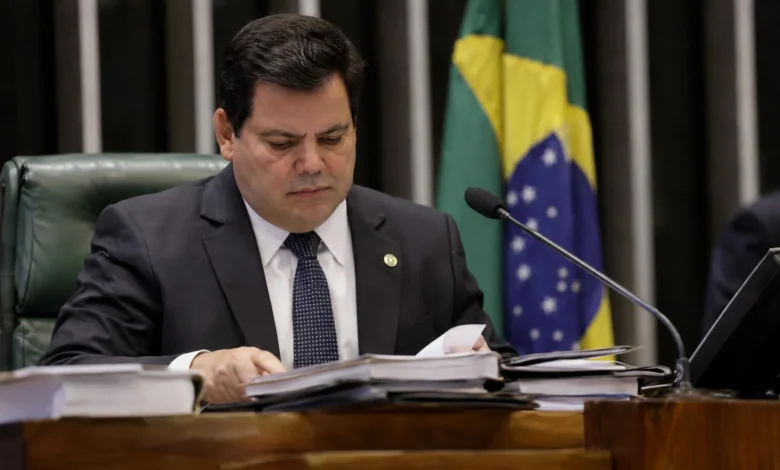
The extension was authorised through an act signed by Senator Davi Alcolumbre, President of the Federal Senate and National Congress. The decision was published in the Official Gazette of the Union (DOU) on 11 November 2026.
Under the extension, the measure will remain active beyond its initial 60-day period, which was due to expire on 23 November.
What Brazil’s Betting Ban Means
President Luiz Inácio Lula da Silva signed MP 1,394/2026 on 25 September 2026. The measure prohibits the operation, promotion, advertising and intermediation of fixed-odds betting services throughout Brazil.




It also introduces amendments to Law 14,790, dated 29 December 2023, which established the country’s regulated betting framework.
The restrictions took effect immediately after the measure was published. Betting operators were required to stop accepting new wagers, while customers were given until 23:59 on 5 October to withdraw their remaining balances.
Betting platforms were taken offline on 6 October. Banks subsequently received a deadline of 9 to 14 October to return outstanding customer funds.
Lula defended the decision, describing the restrictions as a necessary response to the impact of gambling on Brazilian society.
Government Steps Up Enforcement Against Illegal Betting
MP 1,394/2026 also established an Interinstitutional Committee responsible for monitoring illegal fixed-odds betting operations and advertising.
The committee has three main responsibilities:
- Identifying and shutting down illegal betting websites.
- Freezing bank accounts linked to unauthorised betting operators.
- Improving information sharing between government agencies.
Read Also : Brazil Supreme Court Suspends Lawsuits Challenging Betting Ban.
The Ministry of Justice and Public Security and the Federal Police were also allocated additional resources to investigate financial transactions associated with betting activities.
The government said the decision followed consultations with its economic team, civil society organisations and people affected by gambling.
It also pointed to figures suggesting that online betting cost Brazilian households R$62.5 billion in 2025.
What Happens Next in Congress?
The provisional measure has been subject to urgency procedures since 9 November, giving it priority over other legislative business.
According to the National Congress website, the measure is awaiting the establishment of a joint committee. Nearly 100 amendments have reportedly been submitted by members of the Chamber of Deputies and the Federal Senate.
The legislative process requires the joint committee to examine and vote on the proposal first. It must then receive approval from both the Chamber of Deputies and the Senate.
Under Article 62 of Brazil’s Constitution, a provisional measure that is not converted into law before its deadline loses its effectiveness. However, the calculation of the deadline is suspended during the congressional recess, scheduled from 23 December to 1 February.
Supreme Court Challenge Continues
The betting ban is also facing legal scrutiny at Brazil’s Supreme Federal Court (STF).
On 3 November, the court held a public hearing involving 34 speakers who presented arguments and evidence concerning the measure.
The STF subsequently ordered the suspension of all ongoing lower-court cases challenging the betting restrictions.
Meanwhile, the extension gives Congress additional time to examine the legislation as the legal and political debate surrounding Brazil’s betting market continues.
Source: National Congress of Brazil